
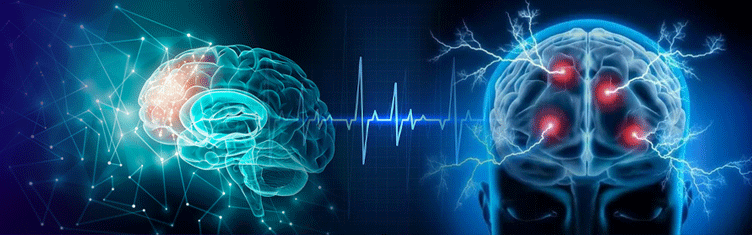






What is the Brain?
The brain is a soft, folded organ that sits inside your skull and weighs about 1.4 kg — roughly the weight of a pineapple. It contains around 86 billion neurons (nerve cells) that communicate through electrical signals. Despite making up only 2% of your body weight, it uses about 20% of your body's oxygen and energy. It is the command centre of your entire body.
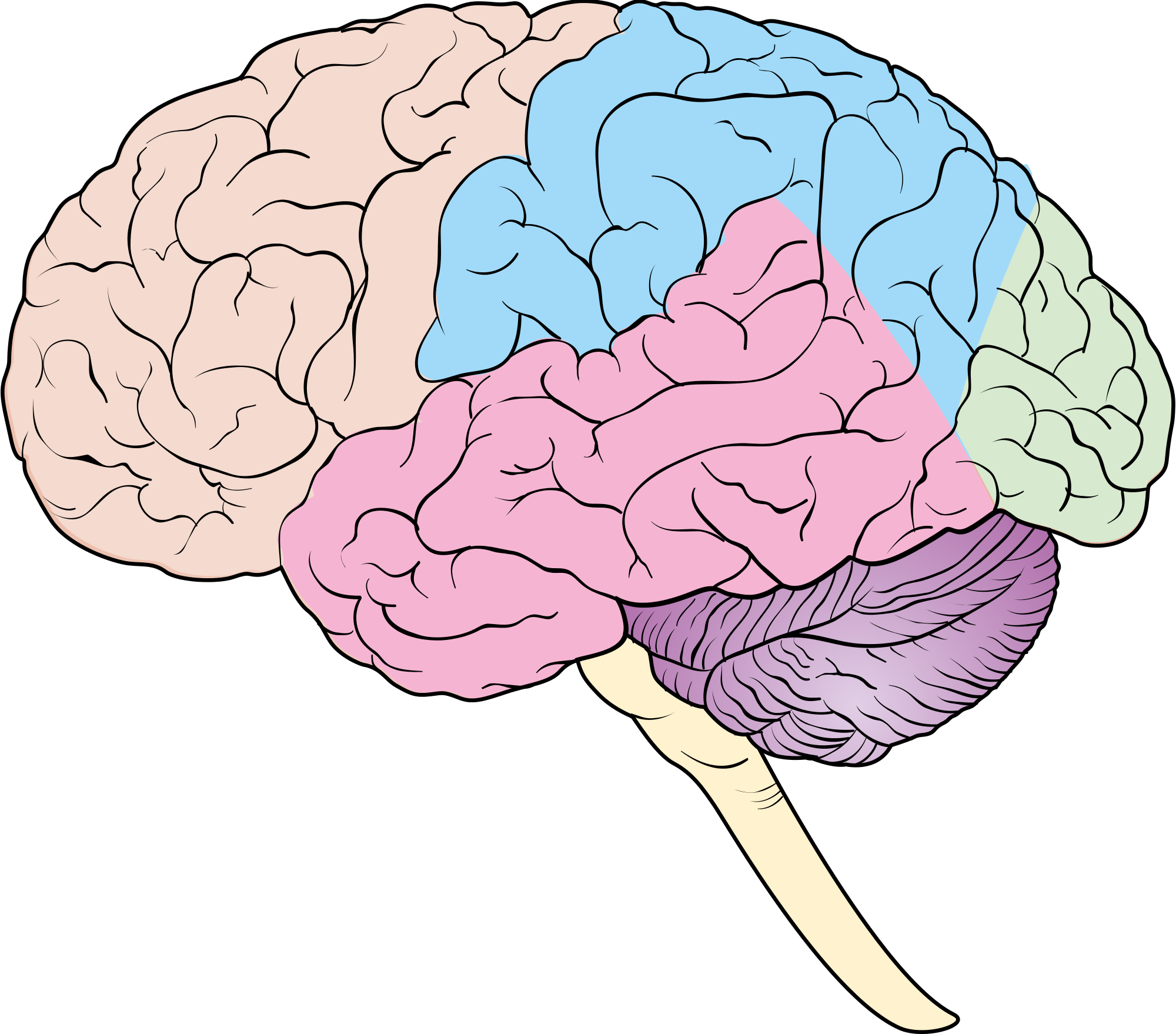
🔍 Key Parts of the Brain
🗺️ The Four Lobes of the Cerebrum
The cerebrum is divided into four regions called lobes, each responsible for different functions:
🟠 Frontal Lobe
Decision-making, problem solving, planning, personality, movement and speech production. Located at the front of the brain.
🔵 Parietal Lobe
Processes touch, pain, temperature, and spatial awareness. Helps you understand where your body is in space.
🟢 Occipital Lobe
Dedicated to vision — processes colour, light, and movement. Damage here can cause vision loss even if your eyes are healthy.
🔴 Temporal Lobe
Handles hearing, language comprehension, and memory. Contains the hippocampus and amygdala.
🩸 Why Blood Supply to the Brain Is Critical
The brain needs a constant supply of oxygen-rich blood to function. Four major arteries supply the brain: two carotid arteries at the front and two vertebral arteries at the back. When blood flow is interrupted — even briefly — brain cells begin to die within 4–6 minutes. This is exactly what happens during a stroke.
💡 How to Keep Your Brain Healthy
Eat Well
Choose fresh vegetables, fruits, fish, and limit salt, sugar and processed foods.
Stay Active
Exercise improves blood flow to the brain. Even daily walking helps enormously.
Sleep Well
The brain clears waste products during sleep. Aim for 7–9 hours per night.
Avoid Smoking
Smoking damages blood vessels, reducing blood flow to the brain and increasing stroke risk.
Keep Learning
Reading, puzzles, and new skills strengthen brain connections and improve mental resilience.
Check BP
High blood pressure is a leading cause of stroke. Check regularly at your nearest health post.
Act FAST – Every Second Counts
Recognize stroke signs early:
F – Face drooping | A – Arm weakness | S – Speech difficulty | T – Time to act
Get Help Now